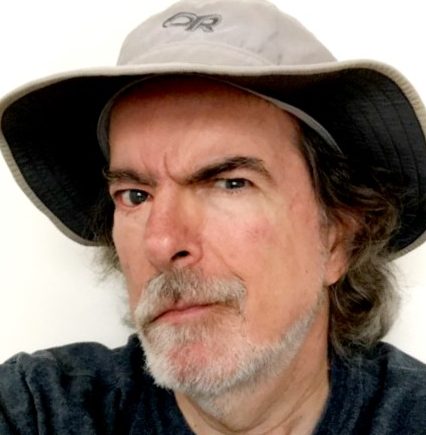
So long, Merc, it was nice knowing you

June 4th, 2009

My days are numbered at the Mercury News. We just settled a new union contract that punishes everybody to the tune of hefty pay cuts in the next year, but a few of us were singled out for extra spankings. All production — copy editing and page designing — will be moved to our sister paper in Walnut Creek, which generously pays its people at about 20 percent less than we earn. It looks like half of our production team will be laid off and the other half will get to soldier on with smaller rations.

Great time to be in the newspaper biz, eh?

I could just put my foot down and refuse to go, but I figure 80 percent of my Merc wages drains my savings considerably more slowly than zero percent, so I’m putting in for one of the Walnut Creek jobs. Walnut Creek is a nice town in the East Bay, close to tons of great trails. It also has BART access to San Francisco, unlike my current abode, and the rents are cheaper, so I don’t have any issues about living up there if I survive the cut.

I once wrote that I wouldn’t give up on the newspaper biz till it gives up on me. Well, the biz has its chance; we’ll see how it goes.

Survivor’s remorse

February 27th, 2009

I’ve heard it said that in combat, when a soldier sees a comrade killed, “better him than me” flashes through his mind for just a moment. Then he spends the rest of his life regretting that one-second urge for self-preservation.

What’s happening to the newspaper biz is nothing like a battlefield … people will walk away with their friends and body parts intact. Some are losing jobs but they are not losing their ability to earn a living.

Still, I can identify with better-he-than-me guilt. Today the Rocky Mountain News publishes its last edition. My employer, who also publishes the surviving Denver Post, will be in much better shape financially, and by extension my paper’s prospects have improved. So my job is probably 3.763 percent more secure than it was yesterday. I don’t feel the least bit good about it.

The Rocky paid good union wages to its newsroom of 230 or so. A few of the paper’s stars got hired on by the Post but the rest are in deep doo-doo, economically. There are no other newsroom jobs anywhere in the country that pay the kind of wages they earned at the Rocky. Really, none.

I figure they’ll do OK … getting a paper out every day requires resourcefulness that’s always in demand (except, perhaps, now). The economy will turn around eventually, though minus a few more newspapers.

I’ve been expecting this day for 15 years. I remember thinking in about 1995 that newspapers had about five years till Internet broadband rendered them obsolete. Here we are nine years later and I’m still working for one.

But my illusions are gone. The end is no longer near. It’s here.

What dies with the Rocky is the age of big-city newspapers that matter. Papers of some sort will probably always be around, but they won’t be able to attract big-time talent until they can offer something better than more work for less pay. Maybe in a generation, after all the trapped-in-the-old-era farts like yours truly have been shunted aside by new blood, young newsies will be content to earn their stripes on starvation pay like cub reporters always had to do in previous golden ages of newspaper journalism. It’ll probably be good for the craft.

It’s not much consolation to the folks in Denver, I realize, but endings always lead to beginnings. Something newer, cooler, smarter, etc. will come of all this in a few years. And if it doesn’t I will still have successfully delayed getting a real job until I had to.

Comes a dawning

January 20th, 2009

A couple days ago I was at work putting together a couple items for our “star watch” celebrity column when a statement from Will Smith struck me: he said he’d told his daughter she could grow up to be president, but now he actually believes it.

Here’s a guy, Hollywood Movie Star and successful beyond most of our wildest dreams, revealing something I suspect a lot of black people are thinking today: America, finally, feels like our country now.

As a white guy I could never presume to know what it’s like to be black in the United States of America, but I suspect it’s been like this: everything we have, The Man can take away. The man dragged us here in chains and kept us there for 300 years. Fought a war that supposedly set us “free” but treated us like dirt for another 100 years. It’s their country, we just live in it.

Until today.

A single Ivy League-educated half-white paid-up member of the nation’s intellectual and financial elite will not fundamentally change America’s race equation. But Barack Obama’s inauguration will say one thing: we don’t have to be the way we’ve always been.

It’s probably dangerous to read too much into what’s happening today: to be the first black president of the United States, you have to be Barack Obama, a guy curiously unaffected by impossible odds against him. Think of what he was up against 18 months ago. Beyond being a member of a racial minority with foreign first and last names and a notorious dictator’s middle name, he had almost no track record in politics. He wasn’t from an established political family. He was a complete outsider.

A guy like him finding a way to become president forces us to widen our ideas about what is possible and impossible.

Obama had no chance, and yet here we are today. Cynicism seems pretty empty in the face of that.

The Romenesko Effect and what it means for the future of news

January 9th, 2009

Newsies read Jim Romenesko’s Media News page every day for fresh evidence of the demise of newspapers, journalism and all we hold dear.

I wonder how many realize that Romenesko is the future of news, and has been every working day for the last decade. What Jim did was vanishingly obvious: identified an audience with a shared self-interest and sent them a daily digest of news they were interested in. He doesn’t have millions of readers like Drudge or Perez Hilton, but I’m guessing he does have about 100,000 (roughly the number of people working in news, last time I looked).

What I’m thinking is: anywhere you can find a 100k audience, you can make a living as a journalist online. The hard part is identifying the audience. The good news is if you start writing about stuff they care about and send a constant stream of timely news via a blog, they will find you. It might take a year or two and you’ll have to bone up on developing a blog, learning search engine optimization and monetizing it via paid clicks (eg, Google AdSense) but the main thing is: those audiences are out there.

Awhile back my wife and I were talking about Caterpillar Inc., the world’s largest manufacturer of earthmoving equipment, which is based in my hometown. Cat runs everything in Peoria so it’s always creeping into the conversations of folks who grew up there. We reasoned that Cat has 100,000 employees worldwide who should be interested in a centralized site for Caterpillar-related news and links. Surely a company of this size with revenue in the tens of billions has a dozen blogs devoted to it already, right? Nope.

Now there’s one. I started Cat Stock Blog in mid-December with the idea of answering a simple question on the mind of everybody who works there: how’s the stock doing? I found a free service that provides free stock chart quotes, assembled a mass of links, designed my site logo and just started posting Cat news all within a week of coming up with the idea. The audience is small today, but over time people who work there will get in the habit of checking the site just as we newsies go to Romenesko every day. Here’s one interesting tidbit: Right now Cat workers represent a tiny fraction of my readership, meaning it could go well beyond the 100k figure.

I’ll be the first to admit that blogging about tractors is not the sexiest topic on Earth. I’d much rather blog about cars, movies, rock ‘n’ roll or walking in the woods, but the first three are covered to death and the last one has very small audience potential (hikers don’t blog, bloggers don’t hike; it’s just how it is).

Romenesko lucked out early on by securing a deal with the Poynter Institute, but I’m guessing by now his brand is strong enough that he’ll survive even if Poynter, which owns the St. Petersburg Times, decides he’s too expensive.

The rest of us will not be so lucky: we’ll have to fight, scratch and blog our way to financial security. It’ll force all of us to learn some things about the money side of the biz that we never worried about before. Maybe most of us don’t have all the aptitudes we need. But people in the news biz are curious by nature and addicted to the Next Big Thing.

The Romenesko Effect is simple: blog about something that hits people where they live — their jobs — and they start showing up, habitually. We can do it much better than anybody else can. If we let ourselves find that 100k audience, the future will take care of itself.

New blog attempt

December 16th, 2008

Times have gotten bad enough in the newspaper biz to force me to re-evaluate what I do with my non-newspaper time. I’ve had great fun combining hiking and blogging over the past three years … I even added some Google ads to my pages in hopes of picking up a few bucks. Well, the bucks are very, very few. It’s possible to make money blogging, but you’ll starve on daily hit counts in the hundreds. You don’t need millions, but you do need thousands, so you need a topic where thousands of eyeballs might reside.

Finding this audience vexed me to no end till last week, when just for the heck of it I decided to see if there’s a blog devoted to Caterpillar Inc., the tractor maker based in my hometown. Cat is a Dow 30 component with $46 billion in revenue and 100,000 employees worldwide. It’s the Microsoft of heavy equipment, so you’d think there’d be a blog or two covering the company. I looked: Nada.

Back when I lived in Peoria, the question “how’s Cat’s stock doing?” was pretty much on everybody’s mind. So this is my theory: Cat has 100k employees, all with an abiding interest in how the company’s doing. If I can get just a fifth of those people, I’ve got the 20k audience that’ll turn my $2 a day into $200 — a living wage even in the Bay Area.

I’ve started something at catstockblog.com. If nothing else, it’ll be interesting to the folks back home.

Wanna win some free shoes?

December 5th, 2008

I’m running a contest over at my hiking blog.

47 and counting

November 9th, 2008

I had another of those birthdays yesterday. My operative approach to getting old is simple and familiar: Every day above ground is a good one, or at least presumably better than the alternative.

The other day it occurred to me what an extraordinary time we’re living in. That was before Barack Obama very predictably was elected president (go back as far as you can count and you’ll find pretty much every time: the better candidate with the better campaign wins. My eyes misted up a bit at John McCain’s concession speech on election night — I figured after all he’s done for the country, he deserves better. But the whole point of an election is somebody wins and somebody loses. Good man, terrible campaign. Bob Dole had the same experience; here’s hoping the Senator from Arizona doesn’t start flogging Cialis Moments anytime soon.)

Heck, I’m getting fed up with Obamamania already and the guy isn’t even sworn in yet. It could be a long four or eight years for the news biz if Obama runs a tight-ship White House that’s anything like his gaffe-deficient campaign. We have whole departments devoted to presidential screw-ups; what if the prez doesn’t supply any? I don’t want to live in such a world (and I doubt I’ll have to).

But back to the extraordinary times. Forget about America finally getting around to electing a black (well, a half-white Harvard-educated millionaire) president. Had to happen sooner or later; Hollywood’s been preparing us for it for at least 15 years. The real deal, historywise, is the Stock Market Crash of ‘08. Guess what: we lived through it. I’m pretty sure no bankers jumped from high windows … I’d have given my eyeteeth to write this headline: Ledge-Leaper Survives by Landing on Taxpayer (mind you, I stole this gag from a cartoonist; and I don’t have any eyeteeth).

The thing about the Crash is: hard times prove what people are made of far more efficiently than times of plenty. In good times you go to work every day, do the same seven or eight things the same way you did them 14,736 times before, go home and watch the same number of hours of television and buy the same number of consumer goods. Years get wasted on repetition.

In hard times, you think about hanging around the office a bit more to keep yourself in good standing with the ol’ paymasters. If your business is getting beat up, you think less about the seven or eight old things that used to work and start thinking about the seven or eight new things that need to work. Tried-and-true is toast during tough times.

A lot of people I know lost their jobs before the crash. We’re hanging on for dear life at the paper, and every headline saying the auto industry is in a shambles or that retail sales are off by 20 percent is telling us: the money from whence our paychecks flow is getting scarce. We’re in the midst of a union contract negotiation that seems, well, counterintuitive: the whole point of a union is to pry more cash out of the greedy capitalist’s pocket. Suppose our company’s greedy capitalist owner is in hock up to his receding hairline and all the money in his pockets belongs to some bank back east, with interest? We never gave 13 seconds thought to how many Jaguars or corporate jets our owner might have to do without to keep us off the picket lines. But right now, his problems feel like our problems.

I can’t imagine things getting as bad as the Great Depression. I can imagine people getting a little more thoughtful about pinning their prosperity on borrowed money. I can see some good coming from Wall Street and the hedge fund crowd getting their come-uppance. The good times of the past 15 years had us doing everything under the sun with somebody else’s money. Now the whole country’s in hock up to its receding hairline when it needs to have something set aside to ride out the tough times.

Over the years the whole world developed an abiding interest in Americans going into debt to buy stuff they could do without in a pinch. Well, the pinch has arrived, and the world’s reacting like anybody would after a door slamming shut wakes them from a nice afternoon nap: panic first, watchfulness next, then the realization that the world has not come to an end.

It’s true that the Crash of 1929 led to the Great Depression, World War II, hydrogen bombs, the Cold War and Vietnam, all of which we’d leave off the Tourist Brochure of the 20th Century. But after all those calamities, people got a little smarter, a little more humane (nobody firebombs whole cities, leaving 100,000 dead anymore). Somehow, against all odds, the world emerges a teensy-tiny better place after these horrible episodes.

That’s the track record I’m banking on.

Where’s my 7 percent a year? A stock market lament

October 14th, 2008

Right after I moved to California, I bought a sliver of the Vanguard Growth Index Fund for $33.66 a share and invested it for “the long haul” in a 401(k) rollover account. If stocks had returned their alleged 7 percent a year, shares of the fund should be trading for about $60 a share (compounded). Today, nine years and a couple weeks later, VIGRX closed at $23.20, well under half of what it “should” have earned and, most painfully for yours truly, 31 percent below what I paid for it.

I reshuffled after the tech stock crash and had a little bit of luck: after the worst week in Wall Street history, my fund balance in that 401(k) rollover is only down 19 percent — after nine years. In 2004 I launched a cautious, sensible plan to dollar-cost average that account back to health. The credit bubble that energized the most recent bull move got me back to even last fall; even after moving a third of my stake to cash last fall, I lost all the gains of four patient, sensible, diversified years in six weeks. I tried buying back into my stock funds when there was blood on the streets; in seven days the market dived another 20 percent (making half of it back on Monday, fortunately).

Of course it’s unfair to gripe about stocks’ returns after a panic sell-off of epic proportions. Everybody’s portfolio stinks at times like these; it’ll sweeten when the fear turns to greed, as it inevitably does.

What gripes me is that I never did anything greedy; I never bought individual stocks on margin, I never dived into options or futures or currencies, I stayed with sensible mutual funds from a sensible fund family. Buying and holding a single fund, as illustrated above, would have cost me a third of my stake; reshuffling cut my losses to a fifth.

I guess I should be grateful: I’ve lived through two market crashes in eight years and I’m still sitting on 80 cents on the dollar. Many have been wiped out.

Melissa and I call experiences like this “tuition”: the cost of learning how the world works. Over the years I’ve gotten richer in experience, but I’d like to be getting richer in the ol’ rollover account.

One thing I have figured out for absolute certain: The only way to make your account balance rise is to put more into it than you take out. Everything else is casino winnings.

Making sense of the Wall Street crisis

October 7th, 2008

The radio show “This American Life” profiles what’s happening on Wall Street with “Another Frightening Episode About the Economy.”

This is must listening for figuring out what’s behind the current stock market sell-off. It describes the workings of “credit default swaps,” which financiers used originally to insure their investments in corporate bonds and make sure they were covered in case the bonds ever defaulted.

Because corporations are highly motivated not to default on their bonds — their bond ratings determine whether they can borrow money to keep their doors open and the lights on — buying insurance against bond default seemed like taking out fire insurance on something that had no reasonable expectation of ever burning down. You know, risk-free.

It works like this: The bonds exist in a world of their own and anybody can buy CDS (credit default swap) as an insurance policy against these bonds never being repaid. In the regulated insurance business, the only person who can insure your house is you. Now imagine if it were possible for all your neighbors to buy fire insurance on your house as well: this is how the unregulated CDS market works.

Why on earth would your neighbors want to buy fire insurance on your house that allowed them to be paid the house’s value if it burned down? Well, say your next-door neighbor saw your toddler playing with fire in the backyard and all the sudden he knows there’s a firebug living on the premises and the fire risk is much higher than anybody else believes. He’d love to go to your insurance agent and say “I’ll pay you a thousand bucks right now if you write me a fire insurance policy so I get paid if the house burns down.”

Your insurance agent knows nothing about the firebug toddler and figures this is the easiest thousand bucks he’ll ever make. It’s so easy that he might sell the premium to somebody else down the line and pocket a commission, or just to make sure he doesn’t get burned, he buys an insurance policy from another agent agreeing to pay him if your house burns down.

This set-up would work fine — all your neighbors and their insurance agents could take out policies on the homes in your neighborhood based on their perceptions of how likely it is that your house will burn down. But imagine what happens if your home actually burns down: now all these insurance agents who’ve taken their easy thousand bucks owe all the neighbors the full value of your home. (Won’t your neighbors cash in big time? Not necessarily: they were buying and selling policies on other homes and now that a house has actually burned, nobody know what those investments are worth anymore).

Remember when Lehman Brothers, the giant investment bank, failed a few weeks back? Well, its bonds were insured by something like $400 billion worth of credit default swaps. When Lehman went bankrupt, its bonds went into default. And now, all the big banks on Wall Street and a bunch of big hedge funds are on the hook for most of that $400 billion, and that’s why they’re not lending to anybody: they’re hoarding cash because they own CDS contracts obliging them to pay anybody who bought insurance on Lehman bonds. An auction will be set up later this week to figure out who gets paid.

Later this month, another auction will settle CDS contracts on Washington Mutual’s defaulted bonds.

How did all these Wall Street wizards get themselves into this jam? Well, they wanted to hedge their risk: if they had one CDS contract requiring them to pay a million dollars if a bond defaulted, they made sure they had another CDS contract paying them the same amount if a default happened. All the Wall Street CDS players traded these CDS contracts back and forth and earned a profit or booked a loss depending on what the market thought the CDS contracts were worth.

Everybody partied like mad till the unthinkable happened: actual defaults on actual bonds. Then it was game over because all these CDS contracts were connected in a chain no stronger than its weakest link. A small number of defaults set off a chain reaction that is spreading havoc on Wall Street as people confront the obligations they’ve taken on in these CDS contracts. If you owe billions you don’t have — and can’t raise — you are insolvent.

It’s going to be a messy few months while all this gets sorted out. Hopefully there won’t be any more massive bank failures to pour gasoline on the blaze before the Fed throws enough money at the financial system to put the fire out.

Bail-out bill passes, financial oblivion averted

October 3rd, 2008

We’re just about done with one of most hair-raising weeks in Wall Street history. Last night, Melissa and I joked darkly that if the House of Representatives fails to pass the credit-crisis rescue plan, something far, far worse than “black” Friday would emerge. More like: Void Friday, or Black Hole that Sucks Up Everything Friday. Fittingly, the Dow Jones Industrial Average nose-dived immediately after the Successful Vote to Prevent Financial Catastrophe.  Could be they suspect the cure will be worse than the disease — and they would know, because it’s their disease. 

The saying goes that the United States of America can be trusted to do the right thing only after all other options have been attempted. Given that the proposed bailout went from three pages and a $700 billion blank check to 400-plus pages of Congressional wish fulfillment, I’m guessing we’re still in “other options” territory. 

At a doctor’s appointment the other day, Melissa found herself explaining to the doc what the crisis is all about. The doctor said she talked to CEOs, economics professors and all sorts of educated types who were simply flummoxed on what the hell’s going on — this within a mile of Stanford University, Big Brain Central of the Bay Area. 

Melissa used to work in banking, where Doing Things Smart was carved into the industry’s granite columns and pounded into the heads of the little people who did all the grunt work. She has a hard time believing what happened, happened. People with no credit history granted mortgages on homes they could not afford. Financial wiz kids packaging these junk loans into A-graded “collateralized debt obligations” and selling them to greater fools the world over. Investment banks going under when their risky bets with borrowed money went south.

The keys to understanding what the hell’s going on are leverage and liquidity. I’ll start with leverage:

Everybody with a mortgage is already using leverage and not even realizing it: exploiting the advantages of investing with borrowed money. Say you want to buy a house that cost $200,000. Even if you had 200k lying around you wouldn’t want that much cash tied up in a single investment, so you’d take out a mortgage and put up only a small stake of your own cash: the down payment. If you put $20,000 down and sell the house later at a $20,000 profit, you’ve made a 100 percent profit on your 20k investment. If you put up your whole 200k and earn 20k, it’s only a 10 percent profit. You don’t need an MBA to see which is the smarter way to a) invest 20k and b) protect the other 180k from market risk.

Buying a 200k house on 20k is a 10-to-1 leverage ratio. Big-money investors have found that with clever computer models they can take on extravagant leverage ratios like 30-to-1 and enjoy extravagant profits by buying and selling intricate investment vehicles most commonly called derivatives. As long as they properly assessed the risks against their bets going south, they could rake in the cash. The great thing about massive leverage is how a small amount of your own money can reap a small fortune; the bad thing is that when you bet wrong, you lose money at a 30-to-1 clip and here’s the catch: even if you decide to sell to get out from under these bad bets, there are no buyers — this is where liquidity comes in.

Liquidity merely represents how easy it is to turn an asset into cash. You’ll never have any trouble cashing in your GE stock because millions of its shares trade every day. The big investment banks, meanwhile, had all these highly leveraged bets tied up in obscure financial assets with a very small pool of prospective buyers and sellers. When their bets on these assets started losing money, they couldn’t sell them even if they wanted to: there simply weren’t any buyers.

The federal rescue plan creates a buyer for these securities so financial firms can get them off their books. The securities — tied to home loans, bonds and other kinds of debt that have intrinsic value — can’t sell right now because the financial firms are in a panic spiral: they need free cash to stay alive, but selling off these assets at fire-sale prices obliges them to book huge losses that force them to put up even more cash.

The only way out of the panic spiral is to create a separate market for these securities. They’re worth plenty most of the time (bonds, loans and other stuff folks are highly motivated to pay off); right now everybody’s so focused on keeping the lights on that they can’t or won’t take on the risk. But there’s a decent chance that the feds can buy these securities cheap and sell at a tidy profit down the road.

So that’s a kinda/sorta explanation of what got us to this point. I’m hopeful because all previous predictions of the apocalypse have proved premature.

Hildy, grandmaster

August 10th, 2008

So, how good is your cat?

Hildy: Chessmaster

I suppose I could beat the cat at chess.

Job hunting for newspaper copy editors

June 26th, 2008

Newspaper copy editors need to be looking for another line of work. We don’t need worthless Knight Ridder stock certificates to figure this out; just the ability to answer this question: Will they hire somebody to replace us after we leave? If not, it means they can get by without us, and the best thing we can do for ourselves and our employers is get another job. It’s win-win: We save them the expense of our salaries and save our own financial hides by working for somebody who considers us essential.

So, who needs us? More people than you might think — the trick is having a willingness to specialize. If you like nice things like new cars and fine foods, start where the money is: Technical, medical and financial. You’ll see a lot of want ads in corporate communications or marketing — either one is a perfectly respectable way to make a living, but I suspect they’d be soul-killers for the average newspaper hack. There will be openings at universities, where the pay will be lousy, and perhaps government, where the benefits will be good but the fun quotient negligible. Don’t be lulled into online if there’s no path to profitability (exception for Bay Area folks and others who have access to venture capital-funded start-ups).

All that gets us back to following the money:

  • Tech: Houses that cost $80,000 in most towns sell for $800,000 in Silicon Valley, a rough measure of the value of high-tech expertise. You won’t make 10 times more money as a technical editor, but if you can score one of these jobs it’s safe to say you’ll do better than you did at the newspaper.
  • Medical: There will always be more demand for better health than modern medicine will be able to provide. Medical information providers need editors who can translate how a pancreas works into language the rest of us can understand.
  • Financial: As long as there is greed, there will be work in the money industry. Newsletters and financial advisers often have a specialized (and lucrative) customer base, and your knowledge of news will be valuable.

So, where to look?

If there’s a Craigslist for your city, start at the “writing/editing” jobs link. (Here’s the one for the Bay Area). Competition will be stiff in big cities like New York and Chicago, but you might have a competitive edge in a smaller metros because there will be few qualified copy editors (except your co-workers); downside: there won’t be many opportunities. With Craigslist, you often send an e-mail directly to the hiring editor, which can give you a leg up. Impersonal forms at large corporate sites are worthless (as are, I suspect, most of the jobs).

What about JournalismJobs.com? It’s worth a look, but keep in mind everybody else in the industry is watching the same ads. The ACES job board occasionally has non-newspaper jobs and allows sending direct appeals to hiring editors.

One site I really like: Indeed.com, which aggregates openings across several major job boards and allows sorting by keyword and location so you can, say, search on all the “editor” ads in Des Moines.

Also, you can use RSS feeds to aggregate several job searches into an RSS feed reader, so you can always track a large number of openings specific to your needs without having to visit a large number of job boards.

The main thing is to keep trying, and keep trying some more. Mass-market publications like newspapers are simply going away because people don’t want them anymore. You can howl at the dark or move toward the light — the place where there’s still a market value for mastery of the English language.

Now start clicking.

Maker Faire pictures

May 6th, 2008

Lots of cool, creative types gathered in San Mateo over the weekend for Maker Faire, a celebration of human adaptability.

Strange devices

My photos are here.

Why it’s pointless to be a global warming skeptic

April 16th, 2008

My take on global warming is intuitive rather than scientific, based on information readily available from my brain. It goes like this:

A) There is a fixed amount of carbon on the planet.

B) Burning stored, high-carbon materials releases carbon into the atmosphere.

C) Petroleum is basically the world’s carbon bank — compressed biomatter from jungles that existed on earth hundreds of millions of years ago.

D) In the past 100 years, a very large percentage of all the petroleum that our planet has ever produced has been burned, and ALL that carbon has been released into the atmosphere.

E) Release of that much carbon into the atmosphere has to be unprecedented in at least the last several million years.

F) It’s simply counterintuitive to believe that 100 years of heavy industrial production based on the burning of petroleum would not affect the behavior of the earth’s atmosphere.

G) The way things are going, we will easily burn up every last drop of oil on the planet in the next century or two. In the next century or three after that, historians will call us the most selfish, short-sighted humans in the planet’s history because we were borrowing all that oil from future generations — with no prospect, no plan, no earthly idea of paying it back.

H) We can adapt to life with different weather, but adapting to a world without petroleum will be the far greater challenge.

I) Given all these considerations, the mandate to save petroleum by not burning it all wastefully yields the same result: less carbon in the atmosphere and reduced global warming, and more petro-chemicals for future generations, giving us more time to develop more sustainable energy sources.

Conclusions:

  • Billions of humans burning highly concentrated, carbon-based materials are bound to screw with the weather when all that carbon is released into the atmosphere.
  • Petroleum is the most powerful, practical component of industrial society. It is, literally, the grease on the wheels. Without it, industry stops. We don’t want that.
  • As a matter of moral principle, each of us should reduce our petroleum consumption to ensure there will be some oil left for our great-great-great-grandchildren and their great-great-great grandchildren.

Al Gore overstates the extent to which the Earth is in the Balance. If anything, Earth is looking forward to the day when we foolishly burn all the oil and resort to massive warfare and bioterror and whatever else it takes to cleanse our species from the planet’s surface. Earth gets back into balance when we’re not mucking up the place anymore.

We’re flying through resources under the mass delusion that we have a say in how things turn out, when the best we can hope for is learning to play by the planet’s rules. Cheaters get to sleep with the dinosaurs.

Thoughts on Martin Luther King Jr.

April 4th, 2008

Doctor King mastered the art of using non-violence as a weapon to get what he wanted (and, more critically, what our country needed). A more conventional weapon killed him in Memphis 40 years ago today. It wasn’t the rifle, or the slug, or even the presumably racist motivation of the man who shot him dead on that motel walkway, that cost King’s life.

I think it was the truth — a truth self-evident and yet fundamentally counterintuitive to human nature. Which was: violence is unnecessary and even counterproductive. We’re so captive of our violent nature that the idea of being willfully non-violent — particularly for political means — doesn’t compute.

King wasn’t the first to come up with this idea: Gandhi used it to kick the British out of India; today Indian companies are buying up British carmakers. Gandhi was murdered, too, which might’ve been on King’s mind when he said he’d seen the promised land but didn’t think he’d make it there with his people.

The genius of King and Gandhi was to use non-violent civil disobedience to provoke the inner violence of so-called civilized people. It worked because it created a “shooting an unarmed man” image that exposed how unjust these supposedly just people could be.

I’ve often wondered if the Palestinians would’ve had better luck following King’s model. Can’t say because it’s never been tried (at least not explicitly), but it sure seems to me that every act of Palestinian violence against Israel convinces the Israelis they’re justified in continuing to make life miserable for the Palestinians. Strikes me that if the Palestinians tweaked the conscience of the Israeli nation without killing and maiming its children, they might have a shot at ending the oppression (though that would render the fire-eating fanatics who run things irrelevant, and who wants to be irrelevant?)

Imagine what would’ve happened to King’s followers in Alabama and Mississippi if they’d have fought back at the bigots with baseball bats and firebombs. The lynchings would probably still be going on to this day.

King’s truth exposed the lie that America was a free country in the middle of the 20th century, when skin tone determined which schools people could send their kids to, which fountains they could get a drink from.

The truth got King killed, but he breathed life into an ideal that made America a more truthful country. We all owe him a thank-you for that.

Planetary musings

March 25th, 2008

Morning on the Carrizo Plain

Life is what happened when the planet was busy making other plans. I’m not sure anybody knows exactly how or why non-living bits of matter became self-replicating bits of living organisms that eventually evolved into us. Whatever it was, we’re grateful.

One thing I’ve figured out since I started spending more time outdoors: we’re just one more species on a planet teeming with them. Earth has no regard for our minor hopes and petty ambitions. It’ll live on long after we’re gone.

A lot of humans fret over the damage we’re inflicting on the planet. I have a hard time getting totally worked up over our trivial contributions — it’s not like we can move continents, create mountain ranges, sprout volcanoes. The planet’s always tearing one part down and building another part up. Most of California was ocean bed a few million years ago. There were no activist organizations to protect aquatic species royally screwed by the collision of tectonic plates that created our lovely coastline and left dry land where the ocean used to be.

There’s only one problem with the “stop worrying, the planet’ll be fine” approach: Greedy short-sighted buck chasers use it as an excuse to do nothing about disappearing forests, rivers, lakes and living things that, frankly, the Earth can adapt to losing. Some kind of life will pretty much always live this planet.

The species that really needs clean water, abundant forests and thriving wild ecosystems is us. Wild places store our best hope for survival. Ruining them ruins us.

Blasting the tops off mountains to protect mining jobs or chopping down ancient redwoods to provide a few logging jobs might be good for one generation, but it’s stealing resources our grandkids and great-great grandkids and they’re great-great grandkids are going to need.

There’s no such thing as saving the environment. There’s only saving ourselves.

One for the “trust but verify” file

March 20th, 2008

From this morning’s AP:

BAKERSFIELD - While authorities in two states searched for a young boy they thought had been abducted, 9-year-old Zane Newton was buried under an accidental collapse of dirt near his home. His body was found “completely covered” in dirt in a lot hours after the reported kidnapping, police said.

Newton’s playmate told police that the 9-year-old was abducted midmorning Wednesday as the two were playing outside. A masked man pulled up in a black car and opened fire on them, the boy said, adding Newton might have been wounded before the man took him.

In reality, police said, the boys were playing in a lot when Newton fell into a hole and was buried when it collapsed around him.

I guess it just made a better story.

Credit crisis not explained

March 19th, 2008

The New York Times tries to explain the credit crisis, but can’t really, but can at least give an idea of what went wrong. This alludes to the post about leverage and hedge funds I mentioned the other day:

Investors then goosed their returns through leverage, the oldest strategy around. They made $100 million bets with only $1 million of their own money and $99 million in debt. If the value of the investment rose to just $101 million, the investors would double their money. Home buyers did the same thing, by putting little money down on new houses, notes Mark Zandi of Moody’s Economy.com. The Fed under Alan Greenspan helped make it all possible, sharply reducing interest rates, to prevent a double-dip recession after the technology bust of 2000, and then keeping them low for several years.

Joe Sixpack got into the act by borrowing more than he could afford against his house, figuring the price would go up forever. Bad idea:

The American home seemed like such a sure bet that a huge portion of the global financial system ended up owning a piece of it. Last summer, many policy makers were hoping that the crisis wouldn’t spread to traditional banks, like Citibank, because they had sold off the underlying mortgages to investors. But it turned out that many banks had also sold complex insurance policies on the mortgage debt. That left them on the hook when homeowners who had taken out a wishful-thinking mortgage could no longer get out of it by flipping their house for a profit.

Many of these bets were not huge, but were so highly leveraged that any losses became magnified. If that $100 million investment I described above were to lose just $1 million of its value, the investor who put up only $1 million would lose everything.

Hello, Bear Stearns. Well, goodbye. Read the whole thing to fill in more of the blanks.

This is new: pre-emptive admission of adultery

March 17th, 2008

Remember how Barack Obama said essentially from the get-go that he smoked pot as a teen-ager? Well, the new governor of New York is saying up front that he and his wife both had extra-marital affairs a few years back, but they sorted things out.

In a stunning revelation, both Paterson, 53, and his wife, Michelle, 46, acknowledged in a joint interview they each had intimate relationships with others during a rocky period in their marriage several years ago.

In the course of several interviews in the past few days, Paterson said he maintained a relationship for two or three years with “a woman other than my wife,” beginning in 1999.

The New York Daily News, recipient of this priceless scoop, thoughtfully placed the story above the one about the meltdown of one of Wall Street’s most important investment banks.  Priorities in order, I like that in a newspaper.

Fired sportswriter advises how to keep your print job

March 17th, 2008

Paul Oberjuerge, formerly a sports columnist for a California newspaper, offers 10 suggestions for people who still have their jobs, assuming they want to keep them:

  1. Embrace the web.  
  2. Get a meat-and-potatoes job.  
  3. Suck up.
  4. Stop whining.
  5. Produce.
  6. Stop spending money.
  7. Make sure your editor hired or promoted you.
  8. Keep your head down.
  9. Lose weight, tone up, get a haircut, consider cosmetic surgery.
  10. Achieve excellence.

Click the link to check out his comments on each one. Pretty much spot-on.